This is part of Opinionpalooza, Slate’s coverage of the major decisions from the Supreme Court. Keep up with all of our Supreme Court coverage and analysis by signing up for weekly email roundups. The best way to support our work—and unlock exclusive legal analysis—is by joining Slate Plus. (If you are already a member, consider a donation or merch!)
Last week, an Idaho doctor challenging vague exceptions in the state’s abortion ban testified at the start of a major trial that will test a surprising question: Four years after the fall of Roe v. Wade, is there actually some right to abortion that the federal Constitution still protects?
The plaintiff in the case, Stacy Seyb, practiced medicine at St. Luke’s Hospital in Boise for more than 20 years before the U.S. Supreme Court overturned Roe v. Wade. He specializes in treating high-risk pregnancies, from cases of eclampsia, hypertension, or gestational diabetes to patients with multiple fetuses. But under Idaho law, any physician who acts to “cause the death of the unborn child” violates the law, even when providing emergency care to patients with desperately wanted pregnancies.
To an extent that few, if any, contemplated, the court’s decision in Dobbs v. Jackson Women’s Health Organization has put the burden of Roe’s reversal on Seyb’s patients—patients seeking to bear children. While many women have circumvented abortion bans by utilizing telehealth options and abortion pills, those bans have inflicted harms on women seeking to bear children that cannot be so easily evaded. Physicians treating patients with wanted pregnancies and serious complications are chilled by the threat of criminal prosecution. That has led to a lower quality of care for miscarrying patients, pregnant women being denied treatment for cancer, and women in labor being turned away from emergency rooms or being airlifted out of state. Problems of this very kind led Dr. Seyb to ask whether the Constitution—even in the wake of Dobbs—provides protection to physicians and their patients when state criminal law jeopardized a pregnant woman’s life or health.
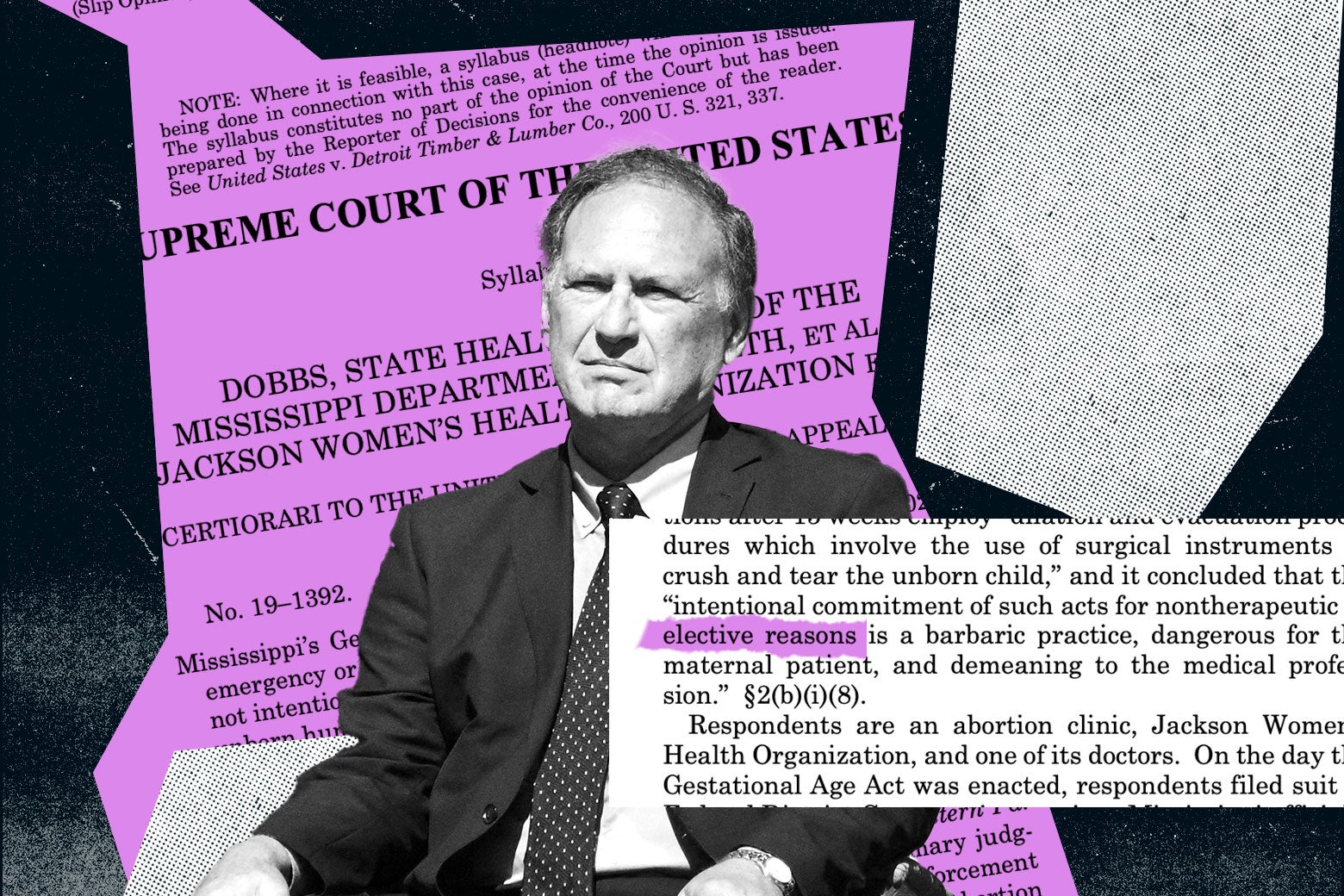
Lawyers for Seyb and other plaintiffs in the Idaho case emphasize that Dobbs does not appear to be a barrier to advancing these constitutional claims. The question that the Supreme Court answered in 2022 was whether “all pre-viability prohibitions on elective abortions are unconstitutional.” In focusing on elective abortion procedures, the court didn’t address all procedures for terminating a pregnancy.
The history of the term “elective abortions” illustrates just how ambiguous the term “abortion” is, a central issue in Seyb’s case. The medical profession played an important role in advocating laws banning abortion in the mid-19th century, which typically contained life exceptions. Courts enforcing this new body of law judged terminations for saving a woman’s life as lawful and interpreted that exception expansively, giving doctors in good professional standing considerable discretion in determining when terminating pregnancy was needed. Physicians popularized the distinction between “elective” and “therapeutic” or medically indicated abortions in the 1950s and 1960s to shield themselves from prosecutions and lawsuits, distinguishing needed abortions for sympathetic patients from “elective” procedures that hospital committees would refuse.
Then and now, the line between elective and therapeutic abortion has never been based on science alone. Exactly what kinds of injuries must a pregnant woman suffer before a termination is lawful?
All this contributes to the confusion about what the Supreme Court decided in striking down Roe. Dobbs in fact rejected only a right to an “elective” abortion. Avoiding death or serious medical harm might be different, even for the current Supreme Court. That’s exactly the constitutional argument Seyb is pressing.
In May 2024, Seyb filed a federal lawsuit arguing that the federal Constitution protects a right to abortion when a patient faces “serious medical risks or the pregnancy is medically futile.” Idaho tried to have the case thrown out. The state pointed to Dobbs, which held that any right not enumerated in the Constitution had to be deeply rooted in the nation’s history and tradition. Dobbs said the right to abortion failed this test, Idaho argued, demonstrating Seyb had no case.
In a decision last February, though, District Judge Lynn Winmill disagreed, speaking about doctors’ rights and women’s rights in the language of self-defense. The judge emphasized that Dobbs focused on a right to elective abortion, while Seyb’s case “tests how far Idaho may go when a woman’s pregnancy severely endangers her health.” The case was not about “the general right to abortion,” he explained, “but the right to self-preservation.”
Dobbs analyzed the question of abortion under a history-and-tradition standard. Judge Winmill observed that the nation’s history and traditions recognized “a right to self-protection and self-preservation” permitting otherwise unlawful acts “when necessary to prevent harm to oneself or another.” The judge then asked whether it “historically encompassed the right to medically indicated abortions” and found “weighty evidence of a historical right to an abortion when necessary to save the life of a pregnant woman,” and considerable evidence of state practice extending that tradition to the protection of her health as well.
Here, the judge suggested there was precedent for the right to self-defense covering “injuries to life or limb.” He noted that Idaho was not providing pregnant women the protections the right of self-defense provided in other contexts; consider a gun fight. He drew this blunt comparison: “Normally, a person has the right to kill another person who means to do grave harm. … In Idaho, however, pregnant women must endure all manner of injuries short of death to avoid compromising the potential life they carry.”
Did the nation’s history and traditions set up this double standard and “allow Idaho to compel this sacrifice”? Winmill observed that Seyb had produced significant evidence to the contrary.
Today self-defense has become inextricably linked with the Second Amendment. But in a remarkable turn, the Seyb trial is asking whether there is still a right to abortion protected by the federal Constitution, reasoning under Dobbs’ history-and-tradition framework, and looking to the right to self-to-defense to help answer that question.
To define the contours of that right, courts will look to history and tradition, just as Justice Samuel Alito did in Dobbs. Of course, it’s not exactly clear how this test is supposed to work. What kind of evidence can (or must) a court consider?
A few things do seem straightforward. For the court in Dobbs, 19th-century abortion bans provided the most important historical evidence, even if those laws were passed when women and people of color couldn’t vote.
In an odd twist, the very same statutes on which the Dobbs court fixated in fact help Seyb. From the very beginning, these laws have included exceptions for the life of the mother. As we have shown, courts long interpreted these life exceptions to protect physicians acting in good faith to preserve a patient’s life—and these actors construed “life” generously and with deference to physicians’ professional judgment.
Physicians themselves understood this tradition of protecting health as reaching beyond cases in which a patient’s death was imminent. In the 19th century, physicians discussing “the right of the mother to self-preservation” applied that right to patients who were “mentally unfit [and] might become deranged,” women at risk of hemorrhage or eclampsia, and “those suffering from dangerous diseases.” Historical evidence establishes a long-standing custom of not enforcing criminal abortion laws in cases in which a woman’s life or health were at risk.
Idaho argues that our history and tradition allow states to force women to endure any injury short of death to minimize any risk to the life they carry. In practical terms, this amounts to a claim that patients must risk their lives too, given that physicians facing the loss of their professional futures and liberty will sometimes wait too long before they intervene. Perhaps the Supreme Court will allow states to force women to die in the name of protecting prenatal life. But that outcome won’t be rooted in our history and tradition, even on Dobbs’ own terms.
It’s true that Seyb might not win—and his case won’t spell the end of Dobbs, even if he does. But Seyb focuses attention on the sacrifices the state can require in pregnancy. And the case will dramatize how the rhetoric of ban states diverges from their policy choices. Seyb showcases that ban states have a taste for the carceral—that states interested in protecting life have done so only by criminalizing more people and conduct, while doing less to address infant or maternal mortality, and while attaching little weight to the lives of women themselves.
The first major cases that the Supreme Court decides after Dobbs will tell a story about what the demise of abortion rights means for all of us. Stacy Seyb believes that the fall of Roe surely cannot mean that women will have to sacrifice their health and lives. If he is wrong, we will have to ask ourselves with even greater urgency how long we can live with Dobbs.