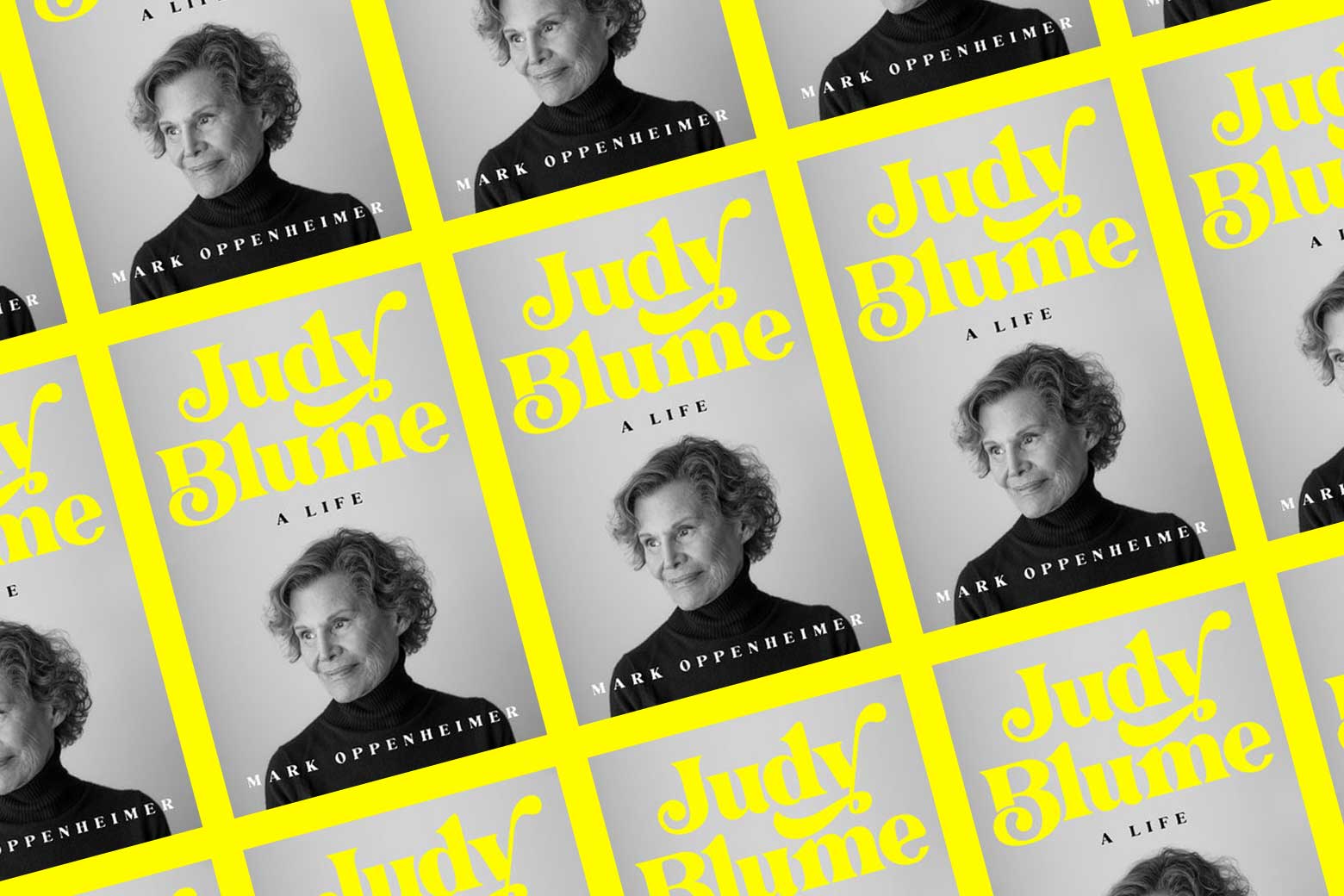
Gabfest Reads is a monthly series from the hosts of Slate’s Political Gabfest podcast. This month, Emily Bazelon talked with Mark Oppenheimer about his new book Judy Blume: A Life. During part of their discussion, they explored what made Blume’s writing so revolutionary for young readers and how her own surprisingly frank upbringing gave her the freedom to go there.
This partial transcript has been edited and condensed for clarity.
Emily Bazelon: So why Judy Blume? There were a lot of people in the moment she started in 1970 who were starting to write what you call “realistic novels for tweens.” You’re kind of distinguishing her from what we now think of as YA, “Young Adult.” So anyway, that’s a lot of detail for me to be giving, but why? Why was she the person who generated so much love and controversy and so many book sales?
Mark Oppenheimer: Judy is the one who says that it’s not YA. She always draws that distinction, so I honor her. There wasn’t such a category. No one talked about YA. There was no category in the bookstore in 1970 for YA. And also her books really are, as you indicate, for middle-grade readers, or they’re not young readers. I think you’d call them middle grade. Kids don’t want to read their own age. They want to read about kids three or four years older.
As to ‘why her,’ you’re totally right that she wasn’t alone. She was part of a movement, unsurprisingly a sort of late ‘60s, early ‘70s movement aligning with the counterculture, aligning with second-wave feminism, aligning with a new attention to the emotional lives of young people and particularly young girls. She was very contemporaneous with Our Bodies Ourselves. She was contemporaneous with Free to Be You and Me, which she contributed a written piece to the book version of Free to Be You and Me.. So she was part of a broader social and cultural movement that included writers like E.L. Konigsberg and S.E. Hinton of The Outsiders, which was published a year or two before Are You There God? It’s Me, Margaret. So she wasn’t alone and she wasn’t the pioneer, but she was a pioneer. In terms of why she caught the world’s attention and ended up selling so darn many books and becoming such an icon, I think number one, of course, is her talent.
But also she was a relentless tourer. She went out on tour. She hit hundreds of bookstores and libraries and JCCs and YMCAs and Hadassah meetings and ACLU meetings. And I mean, just everything.
She would talk about her books anywhere. She’s very good on the stump. She’s charismatic, she’s appealing. She has a great smile. I mean, one has to say. She’s pretty and she always looked very youthful. So especially when she started out, say in 1970 when she was 32, she easily passed for 18. And so it was as if, even though she was a mother of two, she’d been married a decade and had two kids, but she was going out and talking to teens as if she were the big sister or the cool young aunt whom they’d always wanted. And then she stayed on the scene. She was enormously prolific. I mean, you’ll think of someone like S. E. Hinton who wrote this extraordinary quartet of books, but then really stopped writing. And Judy ended up writing a couple dozen books and 10 books in those first five years. So you put all those things together and you end up with a real cultural phenomenon.