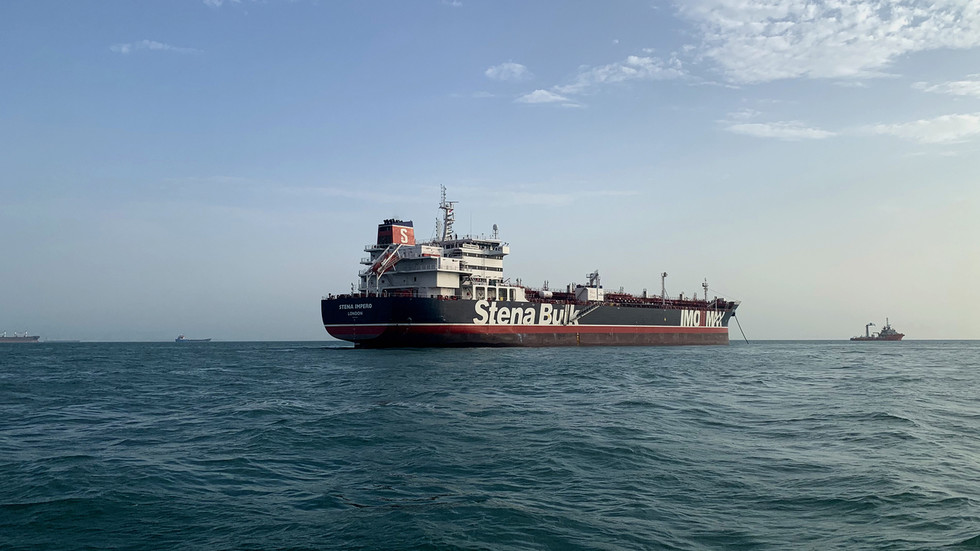
The Iranian military has once again closed free passage through the strategic Strait of Hormuz, citing what it described as US ‘piracy.’
On Friday, Tehran initially declared the waterway completely open for commercial vessels for the remaining period of the ten-day ceasefire between Israel and Lebanon, prompting a fall in oil prices on hopes of de-escalation.
However, while US President Donald Trump praised the news, he said that the US blockade of Iranian ports “will remain in full force” until a peace deal is reached.
According to multiple media reports, the US has presented several demands to Iran, including the handing over of its enriched uranium stockpile. While Trump claimed that Tehran had “agreed to everything,” Iranian Foreign Ministry spokesman Esmaeil Baghaei reiterated that the Islamic Republic would not give up the stockpile, which he described as “as sacred as Iranian soil.”
Follow our live coverage below for continuous updates. You can also read our previous updates here.
Egypt and Pakistan are pushing “very hard” for the US and Iran to reach a final agreement, Egyptian Foreign Minister Badr Abdelatty has said, adding that he hopes a peace deal will be achieved “in the coming days.”
The IDF has reported several incidents of ceasefire violation in Lebanon, accusing “terrorists” – who it said pose an “immediate threat” – of approaching the Israeli-mandated Yellow Line in the southern part of the country.
“Following their identification, and in order to remove the threat, the Israeli Air Force, together with ground forces, conducted precise strikes against the terrorists,” the statement read.
The IDF insisted that the attack was in self-defense, stressing that actions aimed at removing immediate threats are not restricted by the ceasefire.
Ebrahim Azizi, Chairman of Iran’s National Security Commission, has said that Tehran had warned the US over the consequences of the continued blockade, mockingly adding that Washington could “now ENJOY the Strait of Hormuz returning to the status quo.”
According to the report, the IDF “is authorized to continue destroying terrorist infrastructures there even during the ceasefire.”
Iranian Foreign Ministry spokesman Esmaeil Baghaei has insisted that it was Tehran that closed the Strait of Hormuz, arguing that the US “made safe and secure maritime traffic through the waterway impossible.”
He added that Iran has every right to restrict passage due to the threat to national security.
Iranian authorities have reopened six airports, including Mehrabad, Imam Khomeini, Mashhad, Birjand, Gorgan, and Zahedan airports, the country’s Airline Association has said.
At least five more Iran-linked tankers are passing through the Strait of Hormuz despite the US blockade, Fars News agency has reported, citing tracking data.
While Iran allowed “a limited number of oil tankers and commercial vessels to pass through the Strait of Hormuz in a managed manner,” the US violated its part of the agreement and now “continues its piracy and maritime theft under the pretext of a so-called ‘siege,’” a spokesman for the Iranian military has said.
“For this reason, control over the Strait of Hormuz has returned to its previous state, and this strategic strait is under the strict management and control of the Armed Forces,” he said, adding that the regime would be maintained as long as the US upholds the blockade of Iranian ports.