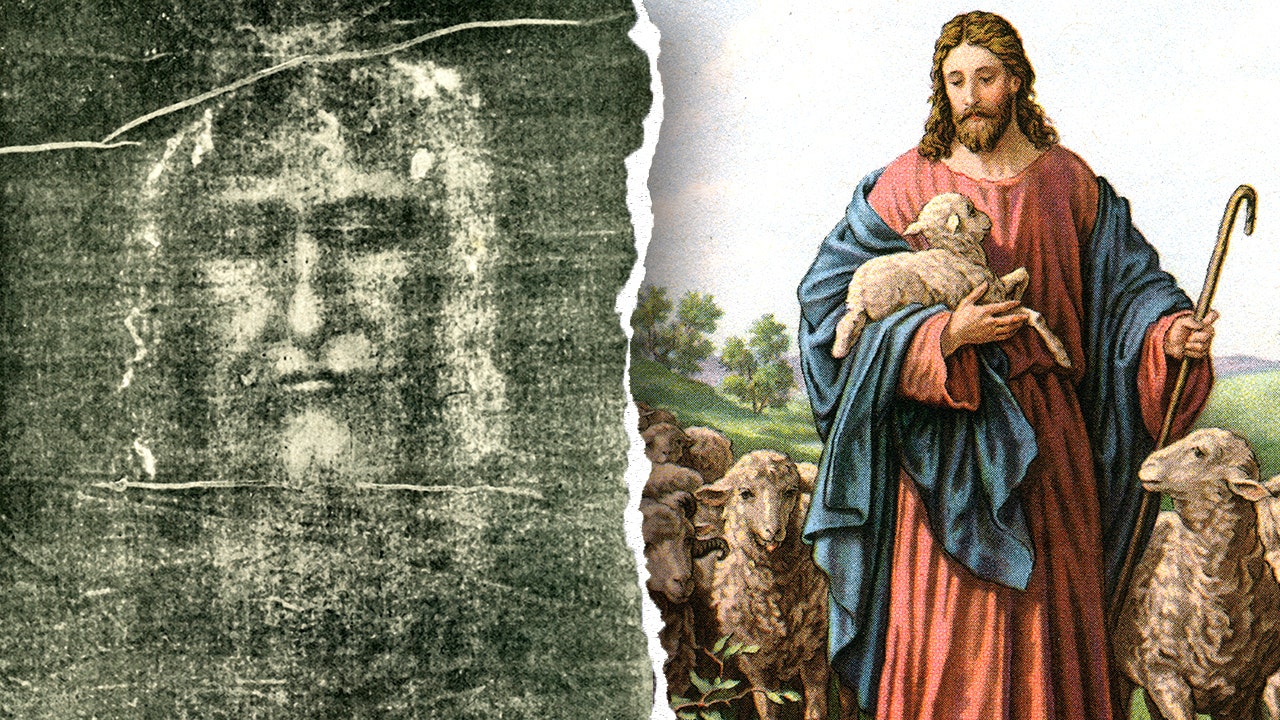
Researchers recently identified food DNA on the Shroud of Turin — a finding that suggests the burial cloth believed to have wrapped Jesus Christ may have been contaminated over time.
In a preprint study published in March on bioRxiv, a group of international researchers analyzed DNA traces from 1978 samples taken from the relic.
Scientists identified plant traces by sequencing microscopic DNA fragments found in dust and fibers collected from the Shroud, rather than discovering visible food remains.
2,000-YEAR-OLD ROMAN RECIPES BROUGHT BACK TO LIFE — HERE'S WHAT THEY ACTUALLY TASTE LIKE
They found a host of different species — with carrot and bread wheat the most dominant.
Carrot (Daucus carota) was the most prominent plant DNA signal, accounting for about 30.9% of identified plant sequences — and the study said the DNA was more similar to cultivated carrot varieties.
The Shroud of Turin, believed by some to bear the image of Jesus Christ, has been analyzed for plant DNA. (The Print Collector/Getty Images; iStock)
About 11.6% of identified plant sequences were assigned to Triticum aestivum, or bread wheat.
"Other cereals found encompassed durum wheat (Triticum durum), einkorn wheat (Triticum monococcum), maize (Zea mays) and rye (Secale cereale)," the study noted.
"Horticultural crops included peppers, tomatoes and potatoes (Solanaceae), as well as melons or cucumbers (Cucurbitaceae)."
TEST YOURSELF WITH OUR LATEST LIFESTYLE QUIZ
The study also noted a "strong presence of peanuts (Arachis spp.) ... weak traces of perennial ryegrass, bluegrass, fescue, oats and clovers were observed."
Some of the species were New World crops, including tomatoes, maize and peanuts, pointing to likely contamination after 1492.
DNA showed evidence of carrot and bread wheat on the Shroud of Turin. (Getty Images)
The study identified fruit tree DNA including "banana, almond, walnut and sweet orange" — with fainter signals from fig, pistachio, apple, pear, hazelnut and grapevine.
Researchers found that the shroud's age "cannot be determined through metagenomics [genetic profiling] because this methodology is unable to provide any robust evidence supporting either a medieval origin or a history dating back two millennia."
"Nevertheless, our findings constitute a novel and significant contribution to the field, thoroughly elucidating the biological traces left by centuries of social, cultural and ecological engagement," the study's authors wrote.
"Collectively, our findings illuminate important aspects of the Shroud's preservation history."
The Shroud of Turin, tied by tradition to Jesus Christ, remains at the center of faith and science debates. (Universal History Archive/UIG via Getty Images)
The shroud, kept in Turin, Italy, since 1578, has a documented history beginning in the mid-14th century.
The relic has been the subject of intense scrutiny over the centuries; radiocarbon dating conducted in 1988 dated the cloth to between 1260 and 1390 A.D.
In 2024, Italy's Institute of Crystallography said its analysis using wide-angle X-ray scattering (WAXS) produced results consistent with the Shroud of Turin being a roughly 2,000-year-old relic, aligning with Christian tradition.
The Shroud of Turin has been kept in Italy since 1578. (Universal History Archive/Universal Images Group via Getty Images)
The study comes amid a string of ancient food-related discoveries over the past year.
In December, Pompeii archaeologists unearthed preserved food remains in ancient Pompeii that reveal what enslaved people ate before the eruption of Mount Vesuvius, including beans and fruit.
In 2025, researchers in southern Oregon found starch granules that reveal how Native Americans processed food thousands of years ago.
A look at the top-trending stories in food, relationships, great outdoors and more.