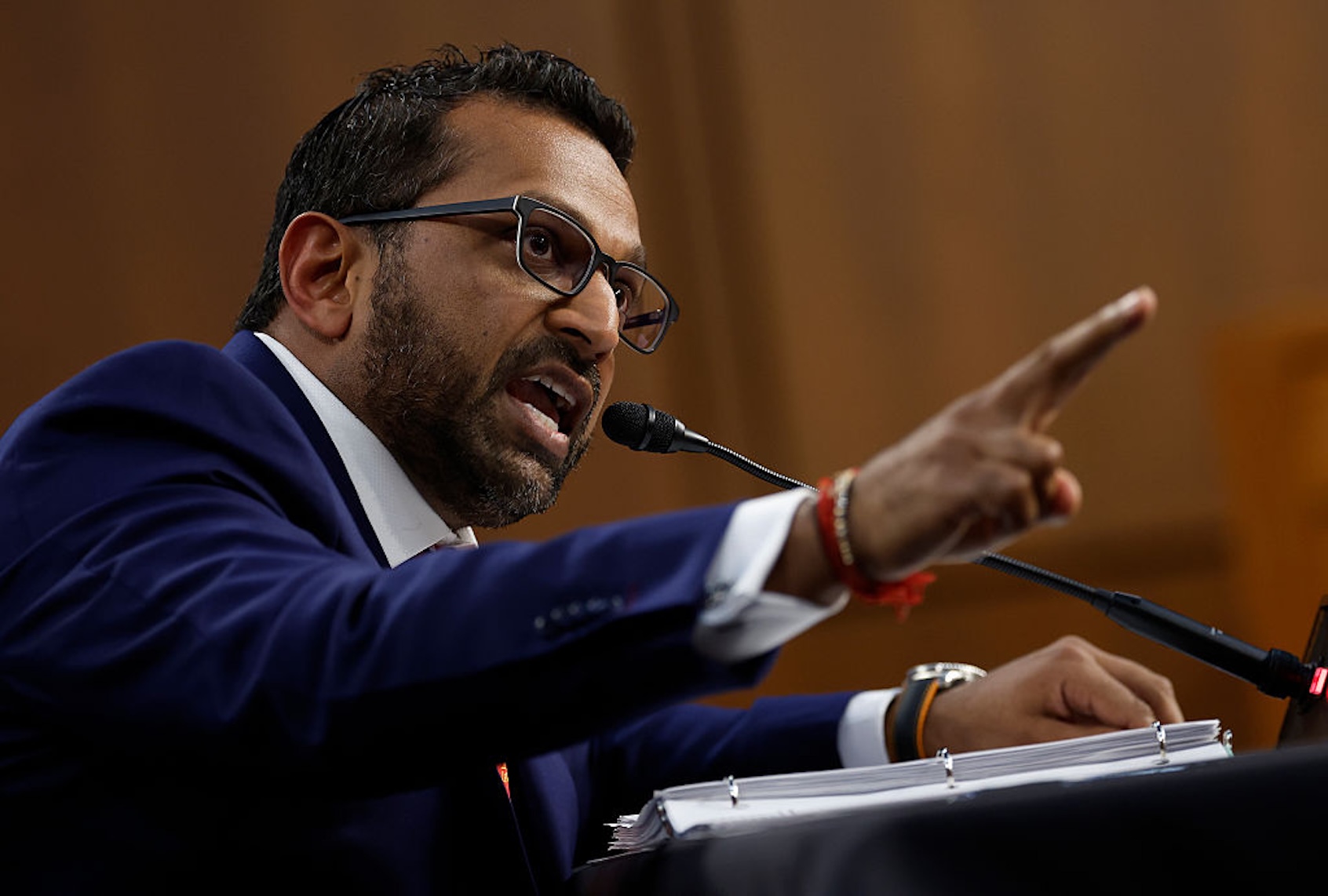
The Atlantic’s recent exposé of Kash Patel is full of alarming allegations. The FBI director, according to sources, has exhibited erratic behavior and absenteeism stemming from what is described as heavy drinking. Especially worrisome is the claim that his staff has repeatedly had “difficulty waking Patel because he was seemingly intoxicated.”
But it was the article’s opening anecdote that drew the most chatter online because it portrayed Patel as hyper-paranoid. In early April, the sources allege, he had a “freak-out” because he couldn’t log onto his work computer. He reportedly “panicked, frantically calling aides and allies to announce that he had been fired.” It turned out to be a technical error; as of this writing, Patel continues to serve as FBI director.
While this story is funny, I have a different theory as to why it went so viral. I believe it illustrates a widespread suspicion many political observers have about Patel — that he is plagued with a sweaty desire for approval and a constant fear of rejection.
This is an administration that is, after all, populated by self-involved personalities, and it’s led by Donald Trump, the biggest narcissist of them all. Even so, Patel stands out for how he appears to crave online adulation and lashes out at any perceived criticism.
Last summer, a similar story appeared in the New York Times. The FBI director, the article alleged, was ordering polygraph tests on bureau officials to ask whether “they have said anything negative about Mr. Patel.” Unprofessional and disturbing as the claim may be, it also provides a hilarious example of how narcissists defeat themselves. When former agents spoke to the New York Times on Wednesday, they described being initially open and “cautiously optimistic” about Patel. But it’s hard to imagine anyone would retain a desire to like the guy after he made them endure a polygraph to assess his own popularity.
Since the Atlantic story appeared, Patel’s childish reaction to criticism has been on full display. On Sunday night, he tweeted that “the only time I’ll ever actually be concerned about the hit piece lies you write about me will be when you stop.” At a press conference two days later, he repeated his insistence that he’s above it all by responding to a question about the Atlantic’s allegations with, “I can say unequivocally that I never listen to the fake news mafia.”
If the goal was to quiet the rampant media and online discussion about his behavior, the move backfired. Instead of quieting the rumors, it lengthened the story’s time in the news cycle.
But Patel’s claims not to care are hard to square with his behavior. On Monday he filed a $250 million defamation lawsuit against the magazine, which is not exactly shrugging it off. If the goal was to quiet the rampant media and online discussion about his behavior, the move backfired. Instead of quieting the rumors, it lengthened the story’s time in the news cycle. Plus, Patel had to list the allegations in the court filing, pulling them out from behind the Atlantic’s paywall and into the public domain, making it easier for people to read and other journalists to quote.
Patel’s best hope is that the lawsuit is dismissed early, because it’s highly unlikely that the Atlantic green-lit a story they knew, as his lawsuit claims, to be full of “false and obviously fabricated allegations.” A similar lawsuit against MS NOW got thrown out two days after Patel sued the Atlantic. Because he seems so hypersensitive about how people see him, I doubt his ego can survive the process of having Sarah Fitzpatrick, the story’s author, and editors from the Atlantic provide evidence for their claims in court. Then again, Patel’s entire stint at the FBI suggests he doesn’t understand that all his efforts to manifest an image of a smart, cool guy that everyone likes are so ham-fisted that they inevitably backfire.
The New York Times report has many examples of this. One agent explained how “social media dominates and controls” Patel’s entire view of how the FBI should be run. He demanded that the bureau provide him an FBI flak jacket, and he is reportedly so invested in being seen sporting it in public that he “refused to exit the plane” in Utah after his purported friend Charlie Kirk was killed until someone could locate one for him to wear.
Agents have complained that Patel uses FBI resources to make sizzle videos of himself engaging in macho-looking behavior at the bureau’s academy in Quantico. One described him “cosplaying as Rambo,” which looked “completely childish.” They also told how Patel abused a trip to Windsor Castle to meet King Charles with a group of both American and British law enforcement agents. The director was reportedly set on posting a photo of himself and agents on social media, even though some of the British agents who were photographed work undercover. While Patel was eventually talked out of sharing the photo and exposing the agents, it seems to have taken some doing.
Part of the Windsor visit’s appeal to Patel, agents told the New York Times, was impressing his girlfriend, country singer Alexis Wilkins, who is 18 years his junior. Multiple reports suggest that he’s very invested in making her feel spoiled, even if it means using government funds. The Times reported in February that “F.B.I. tactical agents have ferried her to a resort in Britain before a dinner at Windsor Castle and to an appointment at a hair salon in Nashville.” (This was on top of his reported use of a government-provided private jet to attend her concerts and take her on dates.)
In response to the criticism, Patel has pretended that his detractors are just jealous of his girlfriend. He raved on X that she’s a “country music sensation” and “a true patriot and the woman I’m proud to call my partner in life.” The couple also appeared on the podcast of Katie Miller, the wife of White House deputy chief of staff Stephen Miller, where they continued to frame the controversy as a personal attack on their singular and timeless love affair. It’s all very silly, especially since Wilkins is far more famous for dating a high-level bureaucrat than for her forgettable song stylings.
Patel’s instinct to use force to fix his reputation reared its head again with the girlfriend scandal. On Wednesday, the New York Times reported that an FBI investigation had been opened into the reporter who broke the story about Wilkins being provided a security detail by the bureau. When asked about this, an FBI spokesperson replied that investigators were “concerned” that “aggressive reporting techniques crossed lines of stalking.” (No chargers were filed.)
Looking at Patel’s career before he took over the FBI shows a strong pattern of thirsty behavior that makes all of this sadly predictable.
Looking at Patel’s career before he took over the FBI shows a strong pattern of thirsty behavior that makes all of this sadly predictable. He was actually doing quite well for himself as a lawyer before he caught the social media bug, working as a federal prosecutor for years before getting plum jobs in national intelligence and defense during the first Trump term. But he started to go regularly on right-wing podcasts, and even hosted one of his own: “Kash’s Corner,” which aired on a channel run by conspiracy theorist Stew Peters.
For those who crave it, being an online conspiracy theorist is a reliable source of attention and praise, especially if they aren’t especially picky about who it’s coming from. Patel swiftly developed a talent for online provocation that would generate lots of clicks and comments, albeit from some of the saddest or weirdest people in the country. For instance, the director wrote a “children’s book” called “The Plot Against the King,” which reiterated Trump’s 2020 election conspiracy theories in a picture book format suitable for the reading-averse former reality TV host.
Patel regularly pandered to the conspiracy theory cult QAnon by hyping their slogan and regularly praising the movement in public. As those same conspiracy theorists started to attach themselves to the Jeffrey Epstein case, Patel was right there with them, hyping the idea that there was a widespread pedophile ring and implying that Joe Biden’s administration was hiding the truth. It was irresponsible and chaotic, but that’s a reliable way to get a lot of attention online.
We need your help to stay independent
Looking over the constant turmoil that Patel has created around himself, it’s hard to not feel a twinge of sympathy. Narcissistic behavior is annoying to those witnessing it, but it doesn’t seem great shakes for the people themselves. The constant trolling for attention and approval is exhausting. And while Patel’s efforts to silence critics cause a lot of harm to FBI agents, journalists or anyone he lashes out at with threats and lawsuits, being thin-skinned doesn’t seem fun for him, especially since he can’t stop attracting negative attention.
Ultimately, though, Patel is doing this to himself. If he wants to live large, there are more amenable careers than being a high-level bureaucrat tasked with keeping the public safe from crime. If he doesn’t like having the New York Times and Atlantic reporting on his personal behavior and how it interferes with his job, he could return to podcasting, a job that draws very little journalistic interest in how you’re living. Even for the Trump administration, the mismatch between Patel’s personality and what the job of FBI director requires is bizarre, which is no doubt why he was reportedly so worried about being fired.