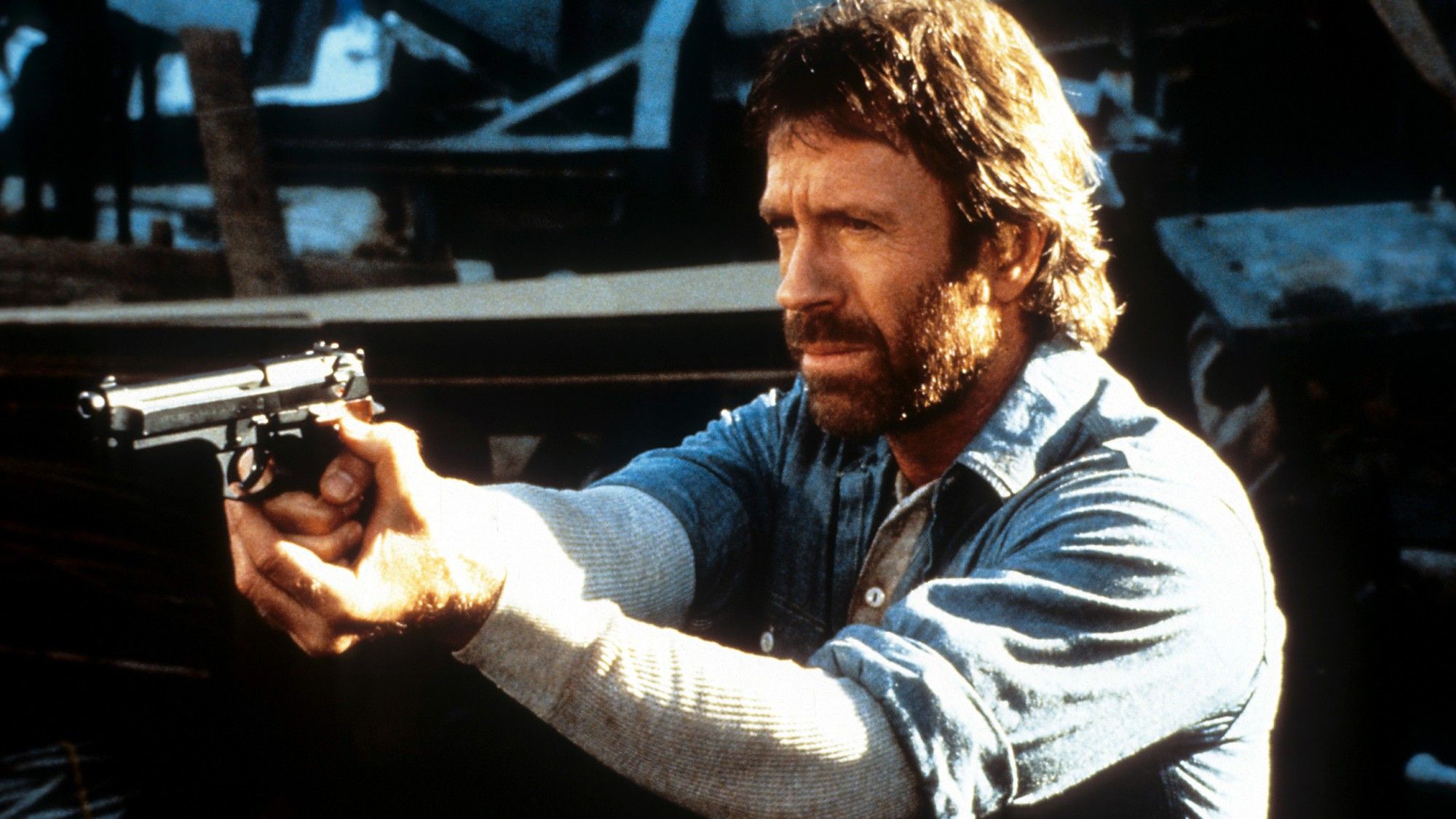
His hardman persona made him an ironic cult hero
On the champions’ podium of 1980s action cinema, Arnold Schwarzenegger and Sylvester Stallone “fought over gold and silver position”, said Ryan Gilbey in The Guardian. “Bronze belonged indisputably to Chuck Norris, who has died aged 86.”
He was an expert martial artist, a six-time world middleweight karate champion who ran his own chain of dojos in California. Among his pupils in the mid-1960s was Steve McQueen, who suggested that he should pursue a screen career.
A spectacular fight sequence with Bruce Lee in “The Way of the Dragon” in 1972 – in which he played a rare villainous role – led to a series of “gung-ho” action pictures, such as “Missing in Action” (1984) and “Invasion U.S.A.” (1985). Violent and unsophisticated they may have been, but Norris insisted on the soundness of the philosophy behind them. “I don’t initiate violence, I retaliate,” he said.
Escape your echo chamber. Get the facts behind the news, plus analysis from multiple perspectives.
He was born Carlos Ray Norris in Ryan, Oklahoma, in 1940, to parents of mixed Irish and Cherokee descent. His father, Ray, who had fought in the Battle of the Bulge, was an alcoholic, “and his long binges crippled the family finances and burdened his waitress wife, Wilma”, said The Times. She moved with her three sons – one of whom, Wieland, was later killed in Vietnam – to LA. There Carlos attended Torrance High School, but was bullied for being mixed race, unathletic and cripplingly shy.
What took him into the mainstream was the 1980s vogue for films “that chimed with the national mood of wanting a resurgent America to hit back after its humiliation in Vietnam”. In “Missing in Action”, he rescued PoWs from Vietnam while showcasing his martial arts prowess. An even bigger hit was “The Delta Force” (1986), in which he and Lee Marvin fought terrorists in the Middle East. McQueen had reputedly advised Norris after seeing his first films that he should aim for “less dialogue”, and this approach won out, particularly in his best-known success, the TV drama “Walker, Texas Ranger”.
For eight seasons from 1993, he played a lone-wolf lawman with “a black belt and an iron will”. At the peak of his fame, two men tried to mug him in Dallas. When the police arrived, they found the men with broken arms, knives on the ground and Norris, then 54, waiting quietly. “We knew who he was,” the men said. “We just figured that all that stuff on television was fake.”
“The transformation of his life often awed him,” said The Economist. Born into miserable poverty in the Oklahoma backwoods, he was now in a place where the public, “half-joking, thought he could do anything”. By the early 2000s, his hardman persona had made him an ironic cult hero, and a long trail of “Chuck Norris facts” started appearing online: claiming that he made onions cry; that Superman wore Chuck Norris pyjamas; that he was the only person who could slam a revolving door.
Norris had always been on the conservative, evangelical Right, said The Telegraph; he was a staunch Reaganite in the 1980s. In 2008, he published “Black Belt Patriotism: How to Reawaken America”. In 2016, he endorsed Donald Trump. Norris married Dianne Kay Holechek in 1958; they had two sons but divorced in 1989. In 1998, he married Gena O’Kelley; they had twin daughters. He also had a daughter from another relationship.